Meeting travel in 2027: planning budgets and CO2 targets
How to plan 2027 meeting travel: build the budget from the best locations, meet SBTi and Scope 3 targets, and prepare for ETS2 without cancelling meetings.
By Convien teamPublished 3 min read
To plan meeting travel for 2027, start with the cost you can avoid: choose each meeting's location from where the participants travel from. That lowers the travel budget and the CO2 that counts towards your climate targets in one step.
Start with the hard saving
Travel to meetings and events is one of the few budget lines you can shape before anyone books. The location decides how many flights, train tickets, hotel nights and hours on the road a meeting creates. With our clients, a better location means up to 35% lower travel cost and up to 42% less CO2.
That makes the location a budget lever first. The CO2 reduction comes with it.
Building your 2027 meeting travel budget
Take stock of 2026. Which meetings took place, where, with how many participants and at what travel cost. Our post on how to calculate the true travel cost of a meeting explains what belongs in it.
Find the gap to the best location. For each meeting, compare the chosen city with the best alternative. The difference is your saving potential for 2027.
Plan the recurring meetings first. Every time they take place, the saving repeats.
Budget per meeting, not per trip. The location decision changes the total travel cost of all participants, so that is the figure to plan with.
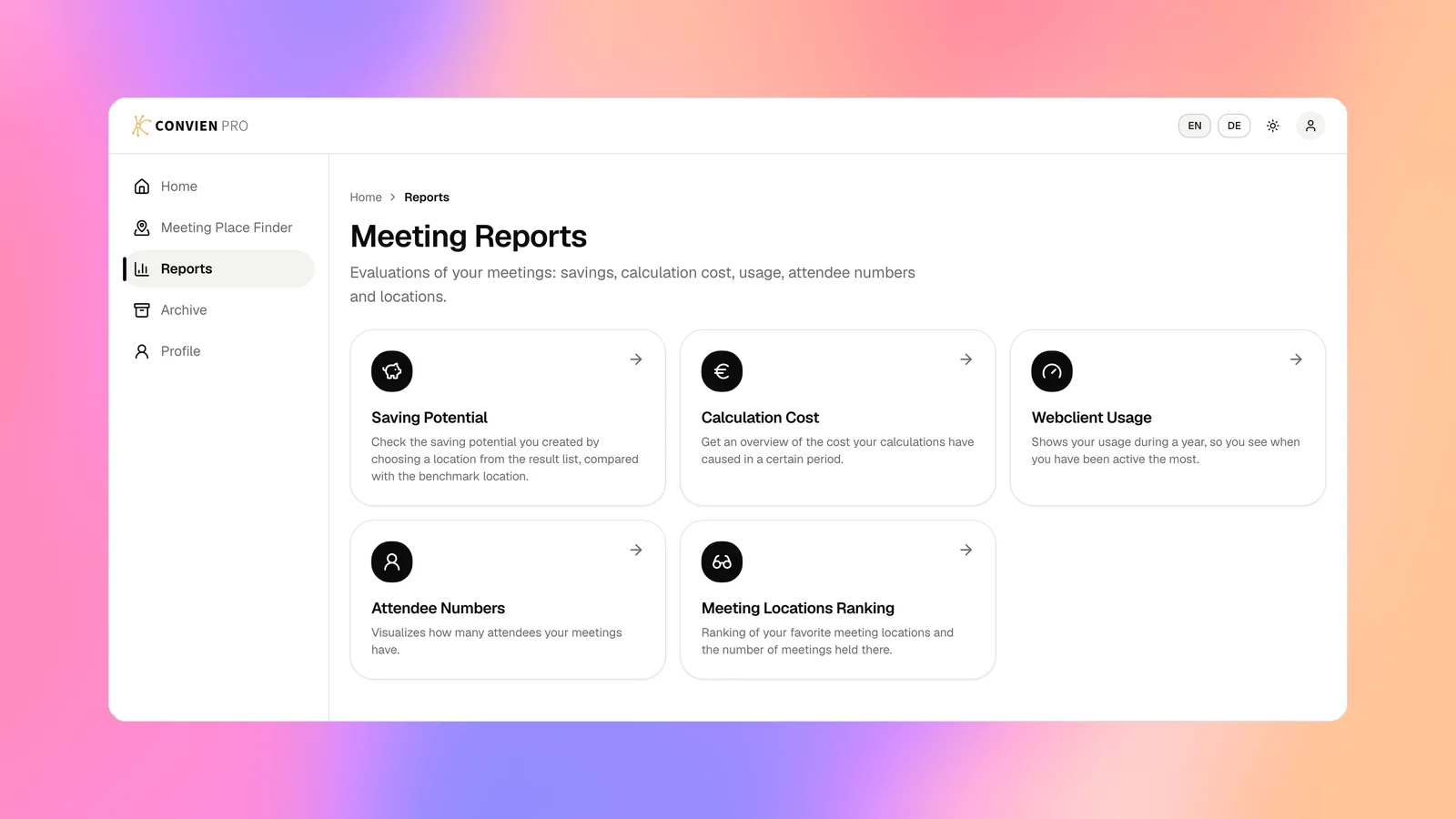
Make the result visible. After each meeting, compare the chosen location with the benchmark, so the saving shows up in your budget review.
Same budget, more meetings
The saving does not have to come off the budget. At a client in the pharmaceutical industry, 32% lower travel and hotel cost per meeting paid for 47% more meetings with the same budget. For 2027 that is a choice worth making on purpose: fewer euros for travel, or more meetings for the same money.
CO2 targets: SBTi and Scope 3
Business travel is reported under Scope 3, category 6. If your company has a target with the Science Based Targets initiative and business travel lies within its boundary, meeting travel counts towards the emissions you plan to reduce. Our post on SBTi targets and meeting travel explains how this works.
A better location reduces these emissions without cancelling meetings. We calculate CO2 according to the VDR standard, ready for Scope 3 reporting.
ETS2: why it matters for planning now
According to the European Commission, ETS2, the EU's new emissions trading for fuels in road transport and buildings, becomes fully operational in 2028. The details are still moving, so check the Commission's page before you set figures. Our post on ETS2 and business travel summarises what the official sources say today.
For 2027 planning, the point is preparation. Meetings that need fewer road kilometres in fossil-fuelled vehicles lower your travel cost today and reduce the base on which a future carbon price is charged.
How we help
The Meeting Place Finder ranks every candidate city by travel cost, CO2 and travel time, from where your participants start. The saving potential report compares each chosen location with the benchmark, so you see the travel cost and CO2 saved per meeting and across the year.
For your baseline, a retrospective analysis of your past meetings shows what each location choice cost and what the best alternative would have saved. One example: for a DAX-listed company we analysed 219 meetings with 5,652 participants. The better locations avoided about 1,170 t of CO2 and saved over EUR 1M in travel spend.
FAQ
Can we estimate 2027 savings before we choose any locations?
Yes. A retrospective analysis of your 2026 meetings shows the gap between the chosen and the best locations. That gap is a good basis for your 2027 plan.
Does ETS2 apply to flights?
No. Aviation is covered by the existing EU emissions trading system, not by ETS2. ETS2 covers fuels used in road transport and buildings, among other sectors.
Does reducing meeting travel CO2 mean fewer meetings?
No. Choosing a better location keeps the meeting and its participants, and reduces travel cost and CO2 at the same time.
Which method do you use for CO2?
We calculate CO2 according to the VDR standard, ready for Scope 3 reporting.
Share this article
Read us first in Google Search.